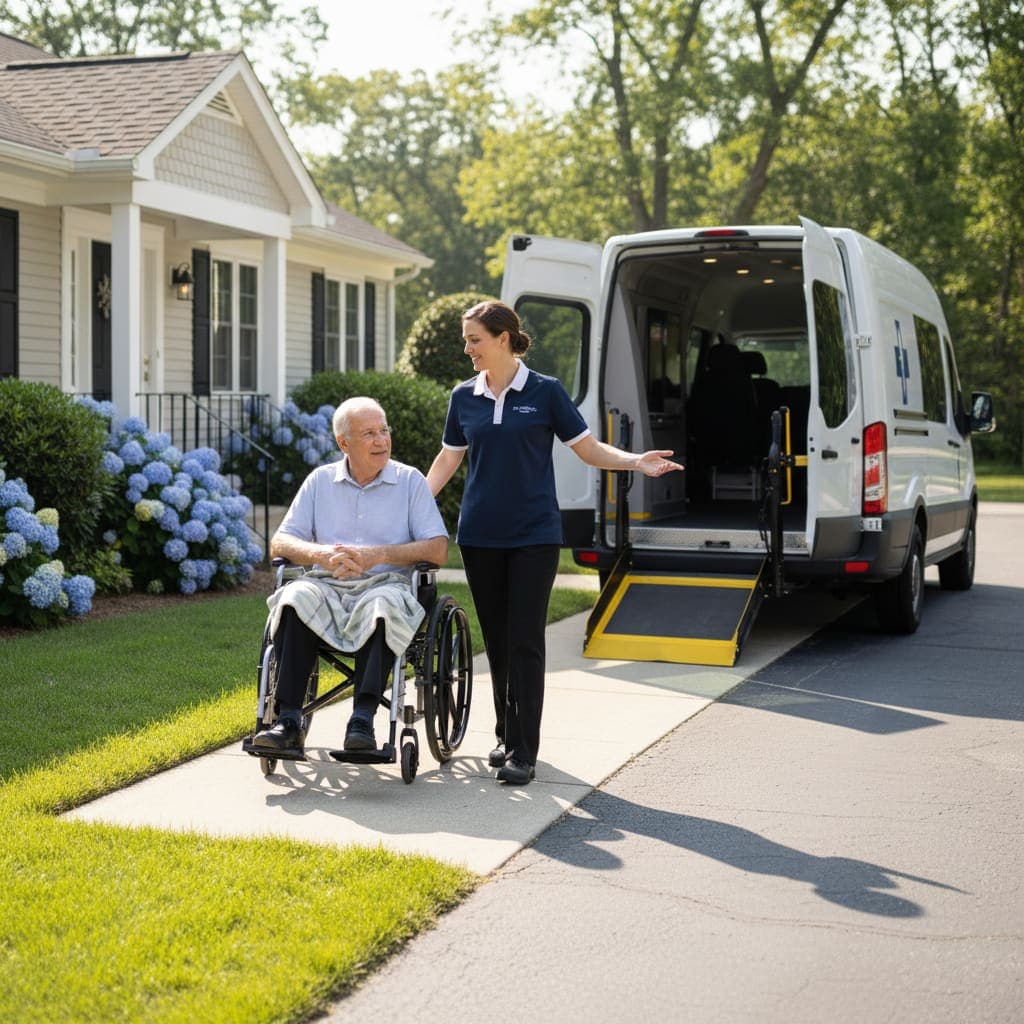
The Unique Transportation Needs of Stroke Survivors
Stroke is the leading cause of long-term disability in the United States. According to the American Stroke Association, approximately 795,000 Americans experience a stroke each year, and many survivors face months or years of rehabilitation. In the Chicago metro area, stroke survivors need reliable, specialized transportation to attend physical therapy, occupational therapy, speech therapy, neurology follow-ups, and support group meetings.
Stroke recovery transportation is fundamentally different from standard medical transport because it must account for both physical and cognitive deficits. A stroke patient may have one-sided paralysis (hemiplegia) requiring wheelchair transport, difficulty speaking (aphasia) requiring patient communication from drivers, visual field deficits affecting spatial awareness, emotional lability causing unexpected crying or mood changes, and fatigue that limits endurance during longer trips.
Dream Care Rides recognizes these complexities and provides stroke-specific training for our drivers. We assign consistent drivers to stroke patients through our standing-order program because familiarity and trust are especially important for individuals navigating cognitive and emotional challenges during recovery. Over time, the driver-patient relationship becomes a stable element in what is often a turbulent recovery journey.
Cognitive Considerations in Stroke Transport
Cognitive effects of stroke create specific challenges during transportation that require trained, patient drivers. Understanding these effects helps families and caregivers prepare for a positive transport experience.
Aphasia (Language Difficulty)
Many stroke survivors have difficulty speaking, understanding spoken language, reading, or writing. Our drivers use simple, clear sentences, allow extra response time, and carry written instruction cards. Family members can provide pre-written notes with key information including the destination address and emergency contacts.
Visual Field Deficits
Stroke can cause hemianopia (loss of half the visual field) or neglect (unawareness of one side of space). Drivers approach patients from the unaffected side, provide verbal cues about surroundings, and guide patients carefully through doorways and vehicle entry points to prevent collisions with unseen obstacles.
Confusion and Disorientation
Some stroke survivors experience confusion about location, time, or purpose of travel. Our drivers calmly reassure patients, repeat destination information, and maintain a calm, predictable routine. The consistency of a regular assigned driver significantly reduces confusion because the patient recognizes and trusts their driver over time.
Emotional Lability
Stroke can cause sudden, uncontrollable crying or laughing that does not match the person's actual emotions. Our drivers are trained to understand this is a neurological symptom, not a sign of distress. They respond with patience and normalcy, not alarm, helping the patient feel comfortable and understood.
Fatigue and Cognitive Overload
Stroke survivors tire more quickly and can become overwhelmed by stimulation. Our drivers maintain a calm, quiet environment in the vehicle, avoid unnecessary conversation when the patient seems fatigued, and provide a restful return ride after therapy sessions that are cognitively demanding.
For Caregivers
When booking, provide as much detail as possible about the patient's cognitive and physical status. This helps us assign the most appropriately trained driver and ensure a safe, comfortable transport experience. Written instructions are especially helpful for patients with communication difficulties.
Book Stroke Recovery Transportation
Trained drivers, cognitive sensitivity, and consistent service for every rehab appointment.
Vehicle Options for Stroke Patients
Wheelchair-Accessible Van
The most common vehicle type for stroke patients. ADA-compliant vans with hydraulic lifts safely accommodate all wheelchair types. Drivers assist with wheelchair positioning and securement, paying special attention to the patient's affected side. Approximately 70% of our stroke transport clients use wheelchair service. $40–$70 base + mileage.
Ambulatory (Sedan/SUV)
For stroke survivors who can walk with assistance or mobility aids such as hemi-walkers, quad canes, or ankle-foot orthoses. Drivers provide extra time and hands-on assistance for vehicle entry and exit. As patients improve through rehabilitation, they may transition from wheelchair to ambulatory transport. $30–$60 base + mileage.
Stretcher Transport
For stroke patients being transferred from acute care hospitals to inpatient rehabilitation facilities, or for patients with severe physical deficits who cannot safely sit in a wheelchair or sedan during transport. Two trained attendants assist with safe patient transfer. $350–$400 base + mileage.
Supporting Your Rehabilitation Schedule
Stroke rehabilitation typically involves multiple types of therapy attended several times per week. A common recovery program includes physical therapy 2 to 3 times per week for strength and mobility, occupational therapy 2 to 3 times per week for daily living skills, and speech therapy 1 to 3 times per week for language and swallowing. This can mean 5 to 9 therapy visits per week during intensive rehabilitation periods.
Our standing-order program handles complex multi-appointment schedules seamlessly. We coordinate rides to different therapy locations on different days, adjust pickup times as your schedule evolves, and provide flexible returns through will-call service when therapy sessions run longer than expected. One consistent driver covers as many of your appointments as scheduling allows, and backup drivers are briefed on your specific needs.
For patients attending outpatient rehabilitation at facilities like physical therapy clinics, the Shirley Ryan AbilityLab, or hospital-based rehab programs, our drivers learn the facility layouts and provide efficient door-through-door service.
Chicago Stroke and Rehabilitation Centers
Shirley Ryan AbilityLab
355 E Erie St, Chicago, IL 60611
Schwab Rehabilitation Hospital
1401 S California Ave, Chicago, IL 60608
Marianjoy Rehabilitation Hospital
26W171 Roosevelt Rd, Wheaton, IL 60187
Northwestern Memorial Neurology
251 E Huron St, Chicago, IL 60611
Rush Stroke Center
1653 W Congress Pkwy, Chicago, IL 60612
UChicago Medicine Neurosciences
5841 S Maryland Ave, Chicago, IL 60637
We also serve outpatient rehab clinics, community speech therapy practices, and home health therapy locations throughout the Chicago metro area. View our full coverage area.
Pricing and Payment Options
Stroke recovery transportation follows our standard NEMT rate structure. Wheelchair transport (the most common for stroke patients) is $40–$70 base plus $3.50 per mile after the first 3 miles. Ambulatory transport is $30–$60 base plus $3.00 per mile after the first 3 miles. Base rates are per one-way leg; a round trip is two legs. Standing-order discounts of up to 15 percent apply to consistent weekly schedules. Illinois Medicaid covers stroke rehabilitation NEMT for eligible beneficiaries at no out-of-pocket cost. Private-pay patients can pay via credit card, debit, or ACH.
For a personalized quote based on your rehabilitation schedule and locations, call (708) 505-6994 or book online. Learn about payment options in our private pay vs Medicaid comparison.
Start Your Stroke Recovery Rides
Consistent drivers trained in stroke patient care. Book for your entire rehab schedule.
Otse Amorighoye
Founder & CEO, Dream Care Rides
Otse Amorighoye founded Dream Care Rides to serve patients with complex medical transportation needs, including stroke survivors requiring specialized care and consistent rehabilitation transport.
Frequently Asked Questions
Stroke patients often have a combination of physical and cognitive challenges that require specialized attention during transport. Physical deficits may include one-sided weakness or paralysis, balance problems, and difficulty with stairs and vehicle entry. Cognitive effects can include aphasia (difficulty speaking or understanding language), confusion, visual field deficits, and emotional lability. Dream Care Rides drivers are trained to recognize these challenges and provide patient, clear communication and appropriate physical assistance.
Yes, our drivers receive training in stroke-specific patient care including communication techniques for patients with aphasia, safe transfer methods for patients with hemiparesis (one-sided weakness), fall prevention for patients with balance deficits, patience and clear verbal instructions for patients with cognitive changes, and recognition of stroke warning signs in case of recurrence during transport. This training is in addition to standard NEMT patient care training.
Yes, many stroke survivors use a wheelchair because of one-sided weakness (hemiparesis or hemiplegia). Our wheelchair-accessible vans are equipped with hydraulic lifts and certified securement systems that safely accommodate all types of wheelchairs. Drivers assist with wheelchair positioning and securement, paying special attention to the affected side. We can also transport patients who use hemi-walkers or quad canes in our ambulatory vehicles.
Call (708) 505-6994 or book online with your rehab schedule. Stroke rehabilitation typically involves physical therapy, occupational therapy, and speech therapy sessions multiple times per week. We create a standing order that covers all your therapy appointments with a consistent assigned driver. The schedule can be adjusted as your rehabilitation plan evolves over weeks and months of recovery.
Our drivers are trained to work with patients who have aphasia or other communication difficulties. We recommend providing written instructions with the booking (destination address, contact person, special needs) so the driver has all necessary information even if verbal communication is limited. Drivers use simple, clear language, allow extra time for responses, and remain patient throughout the ride. Family members or caregivers are always welcome to ride along at no charge.
Yes, Illinois Medicaid covers NEMT for stroke rehabilitation appointments including physical therapy, occupational therapy, speech therapy, and neurology follow-ups. For MCO members, rides are coordinated through your plan’s transportation broker. Fee-for-service members get prior authorization through Transdev/NETSPAP and use enrolled providers directly. Both pathways require 48 to 72 hours advance notice. Medicaid accepted in select service areas — call (708) 505-6994 to check availability.
Yes, hospital-to-rehab facility transfers are a common service for stroke patients. Many stroke survivors are transferred from acute care hospitals to inpatient rehabilitation centers like Shirley Ryan AbilityLab. We provide stretcher and wheelchair transport for these facility-to-facility transfers, coordinating with nursing staff at both locations for safe patient handoffs.
We cover the entire Chicago metropolitan area including Cook, DuPage, Will, Kane, Lake, and McHenry counties. We serve every major rehabilitation center and stroke program in the region, including Shirley Ryan AbilityLab, Schwab Rehabilitation Hospital, Marianjoy Rehabilitation Hospital, and hospital-based outpatient rehab programs throughout the six-county area.
Last updated: March 23, 2026. This page is reviewed and updated quarterly.